Pattern · Accessory · First project
Ribbed worsted beanie: the four-hour first hat
A two-by-two ribbed beanie is the project to knit before any garment: it teaches cast-on, joining in the round, reading your fabric and a crown decrease, and it uses one 100 g ball. This version is written for four head sizes with the crown maths worked out.
Published Abbreviation k2p2
- Vknit
- -purl
At a glance
- YarnWorsted, 190 m / 100 g
- Needles4.0 mm circular 40 cm + 4.5 mm for the crown
- Gauge20 sts x 28 rounds = 10 cm in k2p2 rib, relaxed
- Notions5 stitch markers, 1 removable, blunt tapestry needle
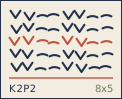
Working chart
| Step | Round / row | Stitches |
|---|---|---|
| Cast on with the long-tail method Use a needle one size down; the brim edge flares otherwise. | - | 96 |
| Join in the round, place marker, work k2p2 rib 32 rounds at 28 rounds per 10 cm gives an 11.5 cm brim that folds double. | 1-32 | 96 |
| Decrease round 1: p2tog inside each purl column Purl two together inside the purl columns only; knit columns stay intact. | 33 | 72 |
| Decrease round 2: p2tog every 8 sts Spacing the decrease rounds three apart keeps the crown round rather than conical. | 36 | 76 |
| Continue to 16 sts, then thread the tail through Total crown depth from join: about 22 cm. | 48 | 16 |
Measurements
| Head circumference | Cast-on | Finished relaxed |
|---|---|---|
| 48-52 cm | 80 | 42 cm |
| 52-56 cm | 96 | 48 cm |
| 56-60 cm | 108 | 54 cm |
| 60-64 cm | 120 | 60 cm |
Yarn and yardage
| Size | Metres | 100 g balls |
|---|---|---|
| 48-52 cm | 122 m | 1 |
| 52-56 cm | 148 m | 1 |
| 56-60 cm | 176 m | 1 |
| 60-64 cm | 205 m | 2 |
Why 2x2 and not 1x1
One-by-one rib pulls in further - about 30% against the flat width - but it is slower to work and the columns are harder to keep even on a first project. Two-by-two rib pulls in about 25% and reads as a bolder texture at worsted weight.
For a hat that will be worn folded, 2x2 also stacks more evenly when doubled over: the two purl columns of the outer layer nest into the two knit columns of the inner layer, so the brim stays flat instead of ballooning.
Sizing by head circumference
Measure the head, then subtract 10% for negative ease. A 56 cm head wants a hat that measures about 50 cm relaxed, because the rib will stretch to fit and the hat needs to grip.
At 20 stitches per 10 cm relaxed, 50 cm needs 100 stitches. Round to the nearest multiple of four for 2x2 rib, so 100 stitches works exactly: 96 or 108 also both divide by four and are the sizes quoted in the table above.
The crown
Start the crown when the hat measures 19 cm from the cast-on edge, or 22 cm if you want a folded brim. Work decrease rounds every third round, never every round - every-round decreases give a spiral point rather than a rounded top.
In the first decrease round, purl two together inside each purl column, taking 96 down to 72. Follow with two plain rounds, then decrease again to 48, plain rounds, then to 32, 24 and finally 16. Thread the yarn through the last 16 stitches and pull.
Finishing and yarn use
Weave the ends in on the wrong side, running each end under the purl bumps for about 4 cm so it cannot work loose. Wash the hat in cool water and dry it flat over a bowl or a plate - a dinner plate gives a 52 cm circumference, which is right for a medium.
One 100 g ball of worsted at 190 metres makes up to the 56-60 cm size with about 15 metres to spare. Buying two balls 'just in case' is the single most common way to end up with a leftover ball that never becomes anything.